
Medical Claim Denial Management Process: 6 Key Considerations and FAQs
- SolvEdge
- Aug 26, 2021
- 5 mins read

In our 4Clover Approach to Denials Management, our team of strategists and technologists have designed a unique four-step strategy for effective denial management in healthcare—to reduce denials, while fostering timely and accurate reimbursements. This approach has helped us identify some of the key considerations around denial management. In this blog, we’ve selected the most common FAQs of denial management teams across hospitals and medical Practices, and how best they can be addressed.Let’s dive in.
Key questions
Denial Management Process
What’s the most ideal way to get the claim status?
How to prevent claim denials occurring due to incorrect or missing information?
How to avoid billing a duplicate claim?
What’s the ideal time to follow up on the A/R regarding insurance?
What’s the best way to handle out-of-network costs?
How to handle repeated requests to provide medical records by the Payer?

SolvEdge’s Denial Management Services
Spending More Time Managing Denials & Worrying about Getting Paid, and Less Time on Creating Amazing Patient Experiences?
We’ve Got You Covered!
At SolvEdge, our denial management programs and prevention strategies are uniquely designed to reduce the spiking denial rates, while having a proactive approach to denial prevention. Our customized workflows help determine the root cause of denials. Once the denial patterns are identified, we create a detailed report that evaluates the recurring causes of claim denials under various categorizations like the Payer, doctor, diagnosis and CPT codes. By leveraging these insights, we implement process improvements to reduce denials and optimize revenues.
SolvEdge’s uniquely designed 4Clover program for denial management is a time-tested and proven approach (with the phases—1. Analyze, 2. Strategize, 3. Discover & 4. Implement) that ensures maximized revenues and collection of every dollar due!
Our Assured Promise

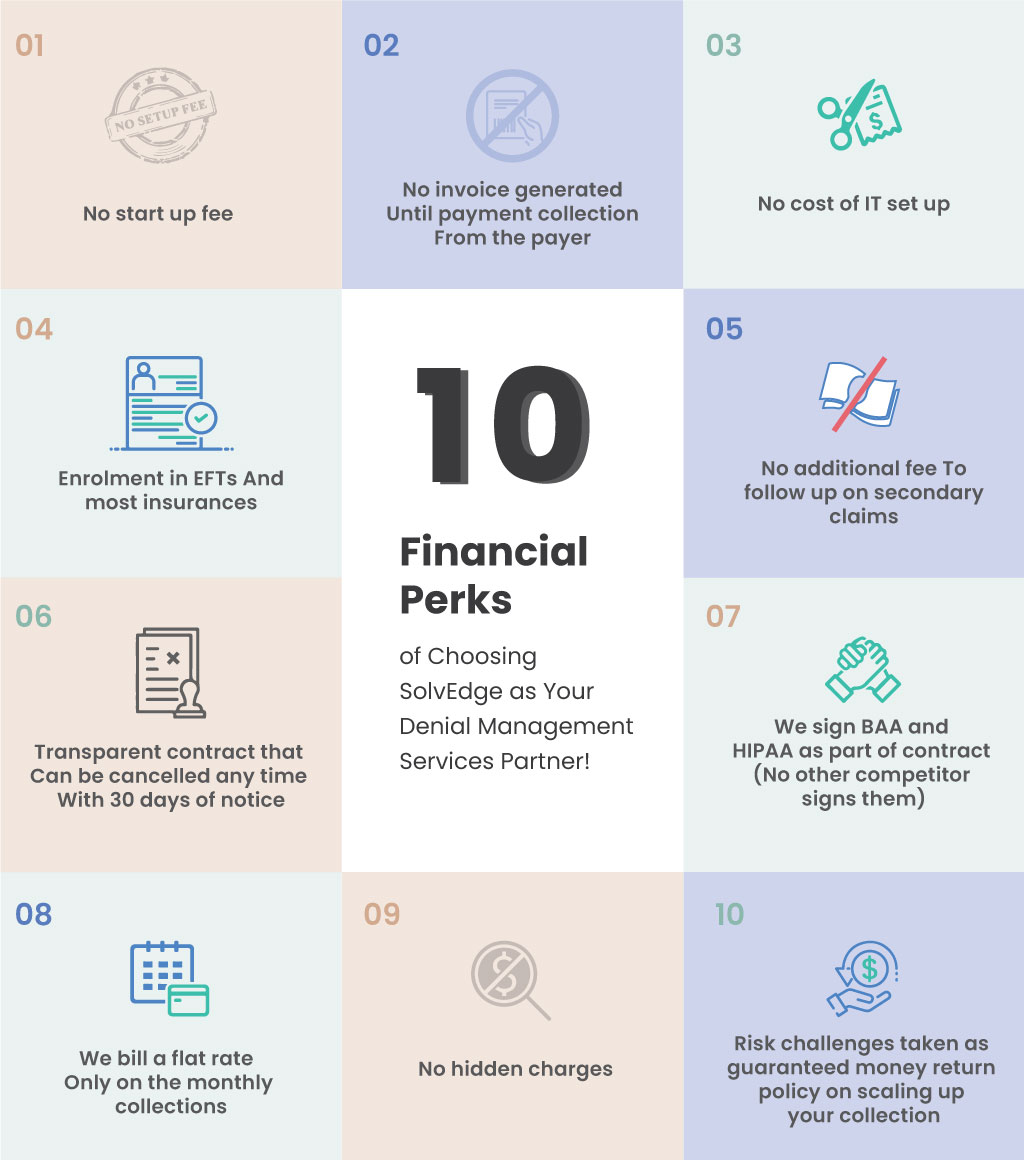
To learn more on how SolvEdge’s denial management services can help improve your collections percentage, Give us a Shout!