
Optimizing Rural Surgical Throughput: The Dual-Campus Strategy
- SolvEdge
- inforgraphics
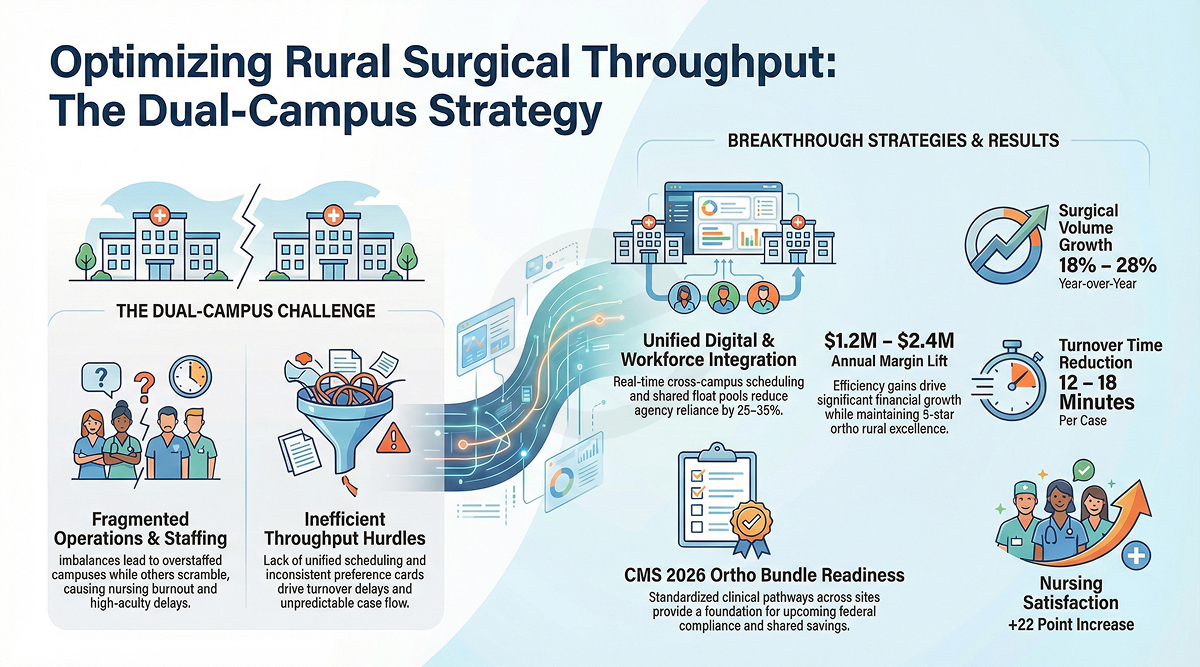
Rural health systems operating across multiple campuses often struggle with fragmented staffing models, inconsistent scheduling practices, and underutilized operating rooms. These operational gaps directly impact surgical throughput, staff satisfaction, and financial performance.
This infographic outlines a proven dual-campus strategy that enables unified digital and workforce integration across sites. By standardizing perioperative workflows, sharing float pools, and enabling real-time scheduling visibility, rural hospitals can increase surgical volumes, reduce OR turnover times, and unlock meaningful margin lift—while improving nursing satisfaction and readiness for CMS 2026 bundled payment models.
For a deeper operational framework and real-world implementation guidance, explore our detailed resource:
FAQ
What is a dual-campus surgical strategy?
A dual-campus strategy integrates digital scheduling, staffing, and perioperative workflows across multiple hospital campuses to improve operating room utilization and throughput.
How can rural hospitals improve surgical throughput without increasing burnout?
By unifying workforce pools, standardizing preference cards, and enabling real-time cross-campus scheduling, hospitals can reduce inefficiencies and turnover delays while improving staff satisfaction.
Why is OR throughput important for rural health systems?
Higher OR throughput directly drives surgical revenue, improves patient access to care, and strengthens financial sustainability—especially as CMS 2026 bundled payment models increase operational pressure.