
Safety-Net Hospitals: Harnessing SDOH Analytics to Drive Health Equity, Reduce Disparities, and Boost CMS Performance in 2026
- SolvEdge
- Feb 03, 2026
- 6 mins read
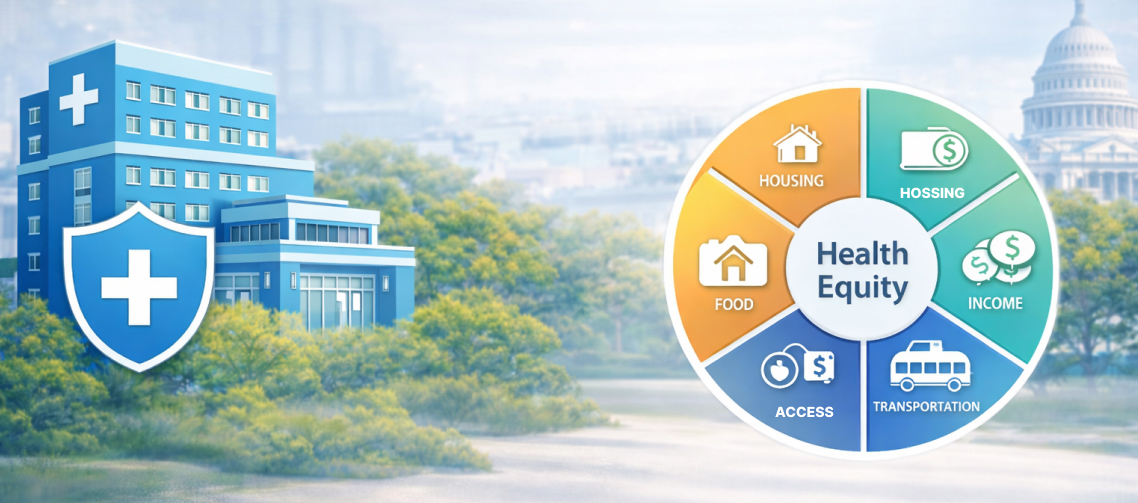
Safety-net hospitals, including public and county facilities, serve as critical lifelines for underserved populations, particularly in California where many rely on Medi-Cal coverage. These institutions often care for patients facing significant barriers due to social determinants of health (SDOH) — factors like housing instability, food insecurity, transportation challenges, and economic instability that profoundly influence health outcomes.
In 2026, as value-based care models evolve and CMS continues to emphasize equity (even amid shifts in mandatory reporting), safety-net hospitals have a prime opportunity to leverage SDOH analytics for meaningful impact. By integrating data-driven insights, these hospitals can close care gaps, align with initiatives like CalAIM‘s whole-person care approach, and strengthen performance under CMS frameworks.
The Evolving Landscape: SDOH, Health Equity, and CMS in 2026
CMS has long prioritized addressing SDOH to advance health equity, with past measures like Screening for Social Drivers of Health (SDOH-1), Screen Positive Rate (SDOH-2), and Hospital Commitment to Health Equity (HCHE) encouraging systematic screening and action. While some inpatient reporting requirements faced proposed removals in the FY 2026 IPPS rule due to administrative burden, outpatient settings see expanded focus — with voluntary screening in 2025 becoming mandatory in 2026 for programs like Hospital Outpatient Quality Reporting (OQR).
Even as federal mandates adjust, the push for equity persists through risk adjustment models, bundled payment initiatives (e.g., Transforming Episode Accountability Model starting in 2026 with equity components), and broader frameworks encouraging upstream driver identification. Safety-net hospitals, serving high proportions of Medi-Cal and dual-eligible patients, are uniquely positioned to lead here, especially as many lag in advanced SDOH analytics and integrated dashboards — prompting interest from regulators and partners.
In California, CalAIM (California Advancing and Innovating Medi-Cal) amplifies this urgency. Building on Whole Person Care pilots, CalAIM promotes whole-person approaches by integrating medical, behavioral, and social services to address SDOH, reduce disparities, and improve outcomes for vulnerable populations. Safety-net hospitals can harness analytics to identify at-risk patients, coordinate Enhanced Care Management (ECM), and deploy Community Supports (e.g., housing navigation or nutrition assistance), aligning directly with CalAIM’s goals.
Why SDOH Analytics Matters for Safety-Net Hospitals
Traditional clinical data alone misses the full picture — SDOH factors drive up to 80% of health outcomes in some studies. Analytics tools enable hospitals to:
Screen and Stratify Risk: Collect standardized SDOH data (e.g., via EHR-integrated tools) to flag high-risk patients early.
Track Disparities: Analyze outcomes by demographics, geography, or social needs to pinpoint inequities.
Drive Interventions: Use predictive models to target resources, reducing readmissions and ED visits.
Improve CMS Performance: Even with reporting shifts, robust SDOH tracking supports value-based programs, star ratings, and equity-focused adjustments.
For safety-net facilities, this translates to better resource allocation amid tight budgets, stronger community partnerships, and enhanced compliance with emerging mandates.
Actionable Strategies: Implementing SDOH Analytics in 2026
Build Integrated Dashboards Invest in platforms that aggregate clinical, claims, and SDOH data for real-time visibility. This supports proactive care coordination and demonstrates commitment to equity — key for CMS scrutiny and CalAIM alignment.
Leverage Screening and Data Collection Adopt validated tools covering core domains (housing, food, transportation, utilities, interpersonal safety). Even if inpatient mandates ease, outpatient requirements ramp up in 2026, and voluntary efforts yield long-term gains.
Partner for Whole-Person Care Collaborate with community organizations, managed care plans, and data utilities (e.g., for ADT notifications) to close referral loops and address needs holistically.
Measure and Demonstrate Impact Track metrics like reduced disparities in readmissions or improved chronic disease management. Case studies show safety-net hospitals closing gaps through targeted interventions, boosting outcomes and performance scores.
Real-World Impact: Case Studies in Disparity Reduction
Safety-net hospitals using SDOH analytics have achieved notable successes. For instance, targeted programs addressing food insecurity and housing have reduced hospitalizations among high-risk Medi-Cal patients. In California, Whole Person Care pilots (now integrated into CalAIM) demonstrated declines in ED visits and readmissions after connecting patients to social supports. Analytics enabled precise identification of needs, leading to measurable equity gains and cost savings.
These examples highlight high engagement potential: by closing disparities, safety-net hospitals not only fulfill mission-driven goals but also position themselves favorably for CMS incentives and partnerships.
Looking Ahead: Positioning for Success in 2026 and Beyond
As CMS refines equity approaches — potentially shifting toward well-being and nutrition metrics — and CalAIM expands, safety-net hospitals that prioritize SDOH analytics will thrive. This means moving beyond compliance to actionable strategies that reduce disparities, enhance population health, and elevate performance.
The time to act is now. By harnessing SDOH data, safety-net hospitals can lead the charge toward true health equity, delivering better care for California’s most vulnerable while strengthening their role in the evolving healthcare landscape.
What steps is your safety-net hospital taking to integrate SDOH analytics? Share your experiences in the comments — let’s build on successful approaches together.