
Bridging Rural Surgical Gaps: How Dual-Campus Hospitals Optimize OR Throughput Amid Workforce Shortages
- SolvEdge
- Jan 09, 2026
- 5 mins read
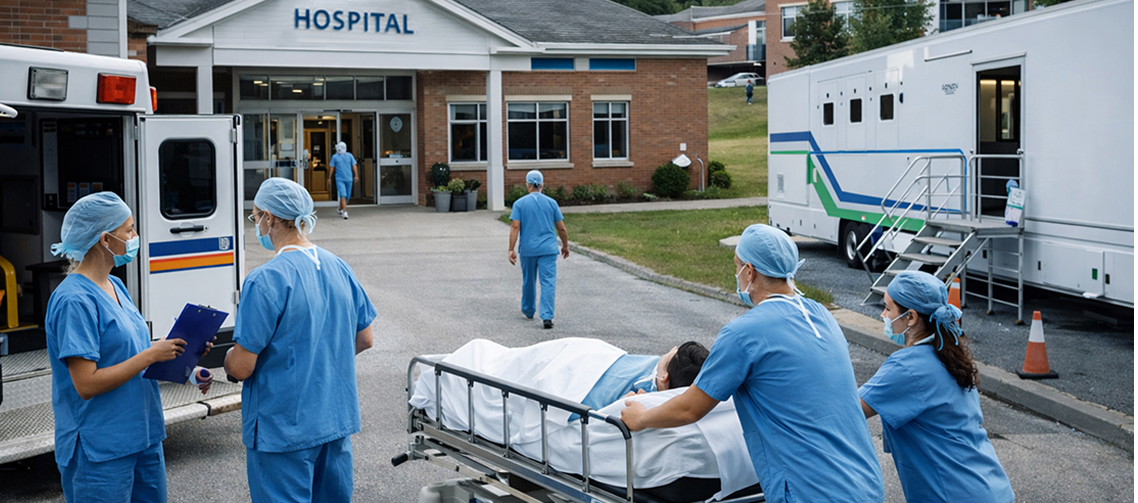
In rural America, surgical access is a lifeline. Yet dual-campus hospitals serving vast regions face a perfect storm: surging demand (often 4,000+ cases annually), chronic nursing shortages, and the relentless pressure to maintain Healthgrades 5-star ortho rural excellence.
Facilities like those in the Lifepoint Health network are proving it’s possible to optimize rural hospital OR throughput across campuses without burning out teams or compromising care. By embracing perioperative workforce solutions and smart digital tools, they’re increasing cases 18–25%, shortening turnover, and protecting margins—even amid ongoing staffing constraints.
The result? Sustained surgical growth that strengthens community health and prepares for CMS ortho bundle 2026 realities.
The Dual-Campus Rural Reality
Operating ORs across two sites brings unique hurdles:
Staffing imbalances — One campus overstaffed while the other scrambles
Scheduling conflicts — Surgeons and teams splitting time inefficiently
Turnover delays — Inconsistent preference cards and supply chains
Blood supply and resource disruptions — Impacting case flow unpredictably
Nursing burnout — High-acuity cases with limited backup
These drive rural hospital nursing shortage solutions to the top of every surgical director’s agenda.
Breakthrough Strategies Dual-Campus Leaders Are Using
Innovative rural systems are transforming throughput with four high-impact moves:
1. Unified Digital Scheduling Across Campuses
Dual campus OR scheduling software synchronizing blocks in real time
Predictive algorithms balancing surgeon availability, case mix, and campus capacity
Outcome: First-case delays ↓30–40%; block utilization ↑20%
2. Cross-Campus Workforce Flexibility
Shared float pools and virtual perioperative support
Standardized training enabling seamless staff movement
Perioperative workforce solutions reducing agency reliance 25–35%
3. Real-Time Analytics for Proactive Management
Dashboards tracking turnover, delays, and staffing gaps live
AI-flagged bottlenecks (e.g., supply or blood availability issues)
Lifepoint Health digital transformation-style visibility driving daily huddles
4. Standardized Pathways with Local Adaptation
Core ortho protocols consistent across sites
Campus-specific tweaks for unique patient populations
Foundation for CMS ortho bundle 2026 compliance and shared savings
The Numbers Tell the Story
Dual-campus rural hospitals implementing these strategies see:
Surgical volume growth 18–28% year-over-year
Turnover time reduction 12–18 minutes per case
Nursing satisfaction ↑22 points (lower burnout, higher retention)
Margin lift $1.2–2.4M annually from efficiency alone
All while maintaining or improving Healthgrades excellence and Leapfrog safety.
Your Dual-Campus Throughput Blueprint
Start transforming today:
1. Map current bottlenecks across both campuses
2. Pilot unified digital scheduling for high-volume services
3. Build cross-campus staffing flexibility with standardized training
4. Deploy real-time analytics for daily decision-making
5. Align pathways for 2026 bundle readiness
Turn Workforce Constraints into Competitive Advantage
Dual-campus rural hospitals don’t need endless staff to excel—they need smarter systems.
Rural surgical leaders managing dual campuses and nursing challenges: Request your complimentary Dual-Campus Throughput Assessment and workforce optimization review today.