
5 Killer Value-based Payment Strategies to Overcome the Impact of COVID-19
- SolvEdge
- Feb 09, 2021
- 5 mins read

The era of COVID-19 global health pandemic has highlighted the importance of creating broader revenue opportunities for hospitals and practices. Most healthcare organizations are still following the traditional Fee-For-Service (FFS) payment model. However, the pandemic has changed the healthcare landscape forever on so many levels, and has had a significant financial impact on hospitals and practices. To meet the evolving consumer needs and mitigate the impact of lost patient volumes, healthcare organizations quickly started adopting telemedicine solutions, Remote Patient Monitoring (RPM) and other digital healthcare services. This sudden trend of telehealth adoption is also spurred by the extensive plans and the expansion of telemedicine reimbursement programs launched by the Centers for Medicare & Medicaid Services (CMS) and other private payer organizations.
While these new proposals and programs may have helped with the Fee-for-service revenues, telemedicine solutions alone are not the quick-fix solution to the financial losses incurred due to decreased patient flows and other factors. Value-based Payment (VBP) models play a transformative role by enabling healthcare organizations to create broader opportunities that holistically benefit care providers in the long-term. The explosion of telemedicine services has enabled Hospitals and Practices to maximize efficiencies during the pandemic. These virtual care capabilities will continue to proliferate as the healthcare leaders are innovating new programs and strategies to minimize the impact of the global pandemic.
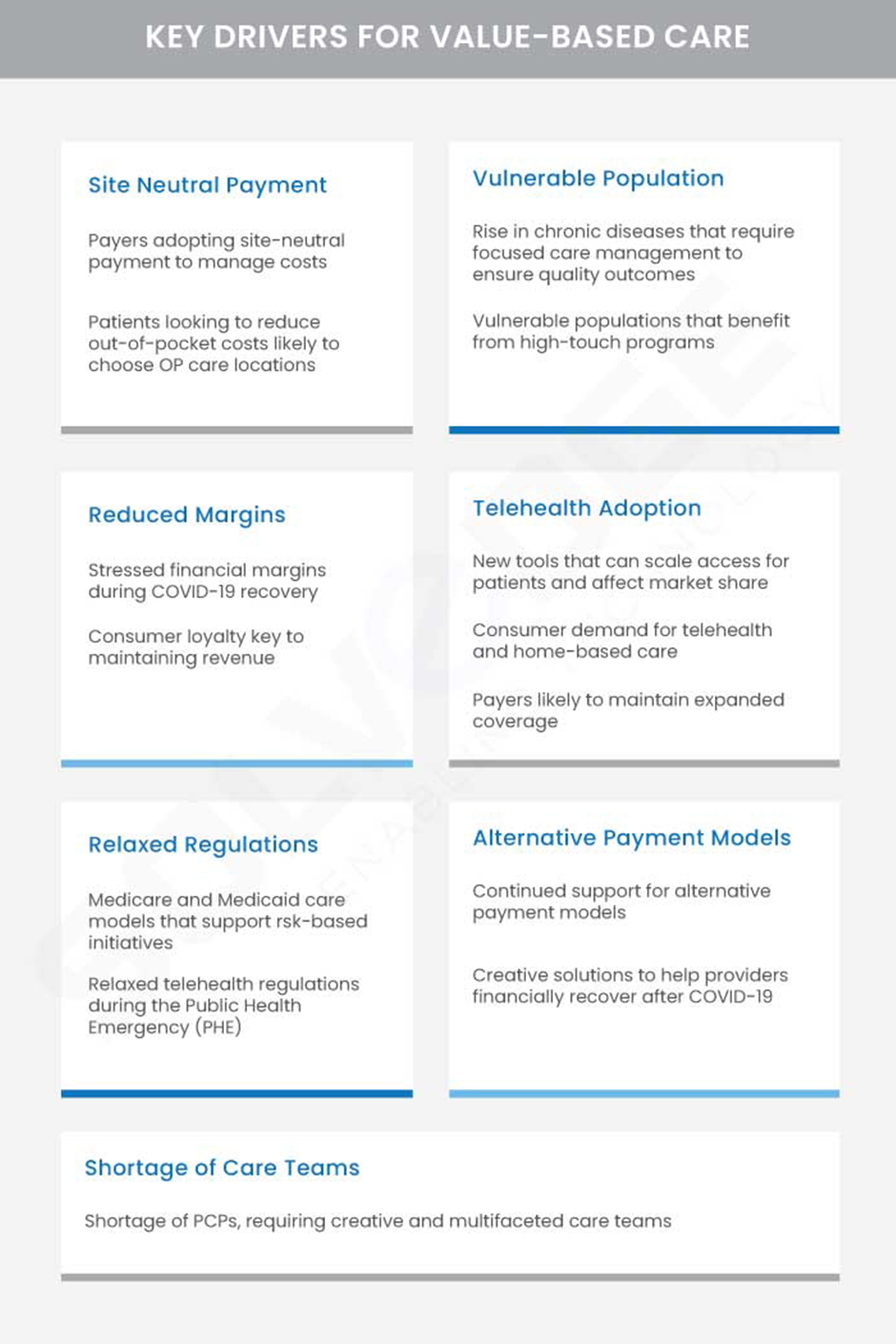
Several key factors have been driving the adoption of value-based care models even before the pandemic era. However, there is a rising need for VBP adoption in the face of COVID-19, as care providers are innovating new strategies to mitigate the financial impact and revenue losses resulting from COVID-19. Below are the key market drivers that foster the adoption of value-based care
5 Digital Health Strategies to Succeed in Value-based Care
The immediate financial impact of COVID-19 on VBP models is still evolving. However, CMS and many commercial payers are making short- and long-term changes so that providers can minimize the negative impact from the pandemic, signaling that payers want these models to succeed. Here are five key digital strategies that drive success for Providers in Value-based care.
1. Virtual Visits – Utilize telecommunications technology for services that would occur in person
2. Remote Patient Monitoring (RPM) – Collect health data from individuals and electronically transfer data to providers
3. Integrated Care Platforms – Optimize health information exchange across EHRs and digital health technologies
4. Navigation Services – Improve patient experience and clinical care workflow with AI clinical navigators
5. Home and Community-based Care Program – Increase access by providing technology-connected care in the community
Top Ten Ways These Strategies Benefit Providers
Ensure follow-up care after a visit
Manage chronically ill patients in real-time
Enhance medication management
Provide after-hours care and increased access
- Divert care away from higher-cost settings
Connect specialists from hub to spoke locations
Improve patient education and experience for postoperative care pathways
Decrease Provider EHR fatigue with preoccupied patient records
Advance population health by reducing barriers to care
Improve operational efficiency and reduce duplication
In essence, healthcare organizations need to focus their attention on the combined strategies of value-based care and telemedicine solutions—to maximize value, in the wake of the Public Health Emergency (PHE).
SolvEdge has extensively focused on telemedicine programs and value-based payment models to transform Patient Experiences and drive sustainable results to our healthcare clients. Our patient engagement platform—RippleCARE is a proven and successful model, trusted by over 450 hospitals, 3500 physicians and over 3.4 M patients worldwide. To learn more about our value-based care programs, and how they can give your VBP strategies a facelift, talk to our team.