
Maximizing Value-based Revenues – Key Tactics You Don't Want to Ignore
- SolvEdge
- Nov 12, 2020
- 4 mins read

Changing regulations are creating a transformational impact on the healthcare landscape. One of the key areas evolving is the fee-for-service payment models. Reports suggest that the Fee-For-Service or the FFS model is an established healthcare payment structure, which is soon to become obsolete. Here’s why it will be. Health insurance companies cannot afford the rising cost of care, especially in case of chronic illnesses.
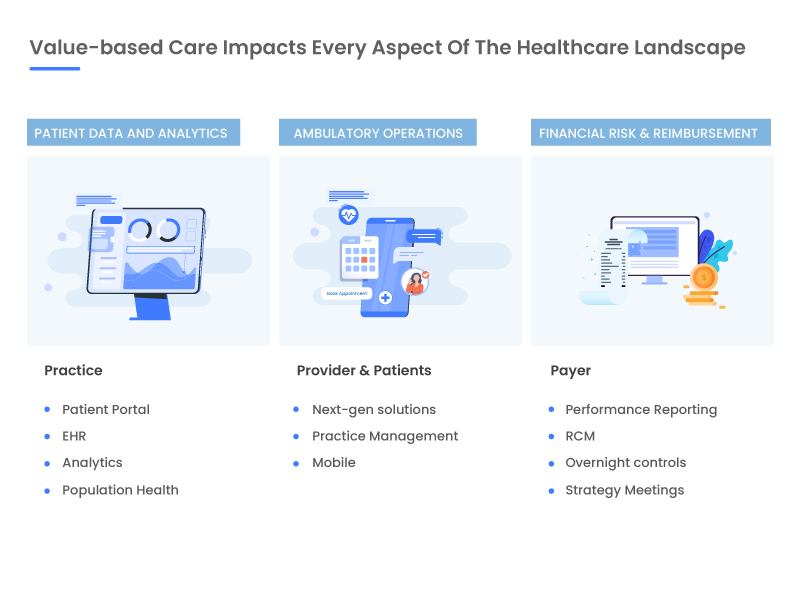
Health Outcomes and Cost Reduction will Accelerate Revenues
Value-based payment models are associated with improving patient outcomes and reducing the cost of care delivery. Value-based care encapsulates various factors including Pay for performance (P4P), Risk-sharing, Incentivized payments, Capitation arrangements, Gain sharing, Value-based purchasing, Risk-adjusted care, and Population-based payments.
What are the Key Goals of Value-based Care?
Having a proactive care approach rather than reactive, at a lower cost are some of the key factors that contribute to the success of value-based care. Hospitals and practices need to focus on population health management, reducing hospitalizations and readmissions, improving patient outcomes at a significantly lower cost. This will result in increased cash flow and revenues for providers based on the health outcomes of the consumers.
Value-based Goals from the Centers for Medicare & Medicaid Services
Deliver patient-centered care
Improve patient safety
Improve clinical quality
Address misuse of services
Avoid unnecessary costs
Redefine care processes and workflows
Improve transparency in performance results
Reduce existing care disparities
Some of the key objectives of value-based care models include superior quality care delivery, reduced readmissions, and improved health outcomes.
To achieve success, care providers need to realize the importance of patient-centered care coordination solutions. This fosters collaborative care and can be achieved only through automation and insight-driven healthcare.
Choosing the Right Value-based Care Model
Based on an organization’s willingness to take risks, care providers can consider choosing from different payment models that can be integrated into their workflows. One of the most adopted models include the Shared Savings approach that requires providers to effectively manage costs, while delivering high-quality care, for which they will be appropriately rewarded with a part of their savings. Alternatively, providing high-cost and inefficient care could have detrimental effects on the provider through the means of additional costs and penalties. There are few other models that you can choose from in terms of the risk factors:
Bundled Payments
Provider-Sponsored
Pay-for-Care Coordination
Shared Risk
Capitation
Key Criteria for Choosing the Appropriate Payment Model
Gain in-depth insights on your patient population – Understand their nature and who your organization will be measured against
Create your baseline population – Learn and evaluate the associated risks and opportunities
Understand revenues, cash flow and payments – Evaluate reimbursement models and ways in which payments will be made to the hospitals and practices
Define patient engagement capabilities – What are your care coordination strategies and have your considered automation and patient engagement solutions to amplify care coordination?
The triple aim of healthcare comes down to these – improve health outcomes, deliver better quality healthcare, and drive down the cost of care.
The Results of integrating value-based revenue model
Accelerated financial growth – in terms of Revenue Cycle Management (RCM) and operational efficiencies
Improved Patient Experience (PX) – along the lines of Patient access, collaborative care, patient engagement and satisfaction
Clinical collaboration – better coordination between hospitals, practices, network design/management, and performance KPIs
Better clinical outcomes – in terms of Population health management, patient engagement, and care pathways management
Streamlined Organizational structure – Change management, leadership and improved adoption
Keeping in mind the overall goal of a value-based delivery model is to improve key performance indicators across the care spectrum, Payers make this possible with changing models on how providers are compensated for care delivery, in terms of cost, time and quality.
Besides the cost factor, automation and care coordination solutions also allows care providers to make timely interventions that facilitate proactive healthcare. By easing the data gathering, analysis and paperwork burdens, automation frees providers to spend more time offering superior patient care and driving better outcomes. In the end, this becomes the true value gained from value-based purchasing.
Take the Next Step
Get started on better value-based payment models today. Contact a reimbursement expert at SolvEdge Healthcare solutions today. Give us a shout.